
Quality Control Standards in the Global Brake Pad Supply Chain
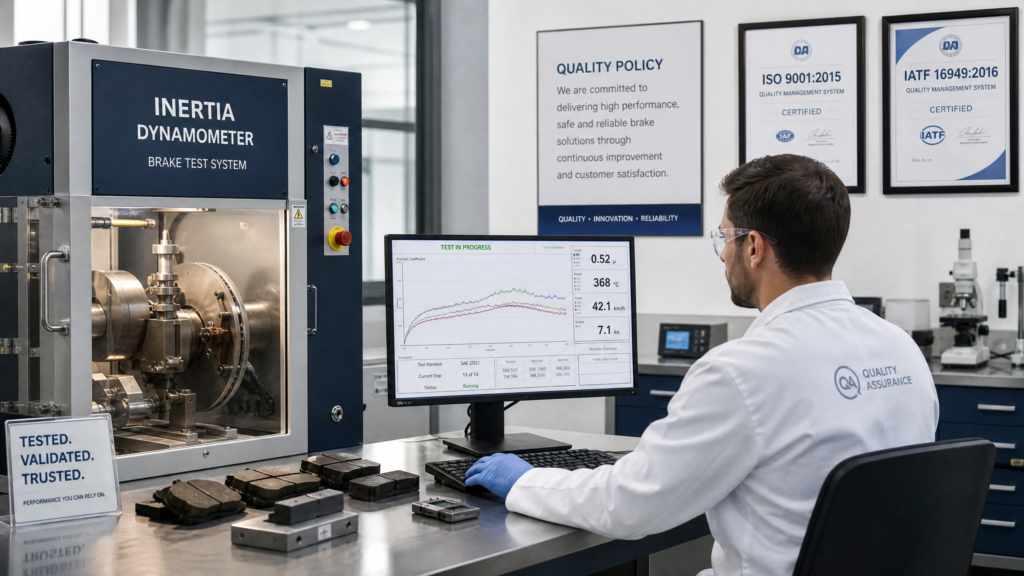
For an international trade independent website, ensuring that the promoted brake pad products comply with international quality standards is the cornerstone for gaining customer trust and expanding into global markets. In the globalized brake pad supply chain, a stringent quality control system is indispensable.
From Raw Materials to Finished Products: The Future of Fully Automated Brake Pad Factories
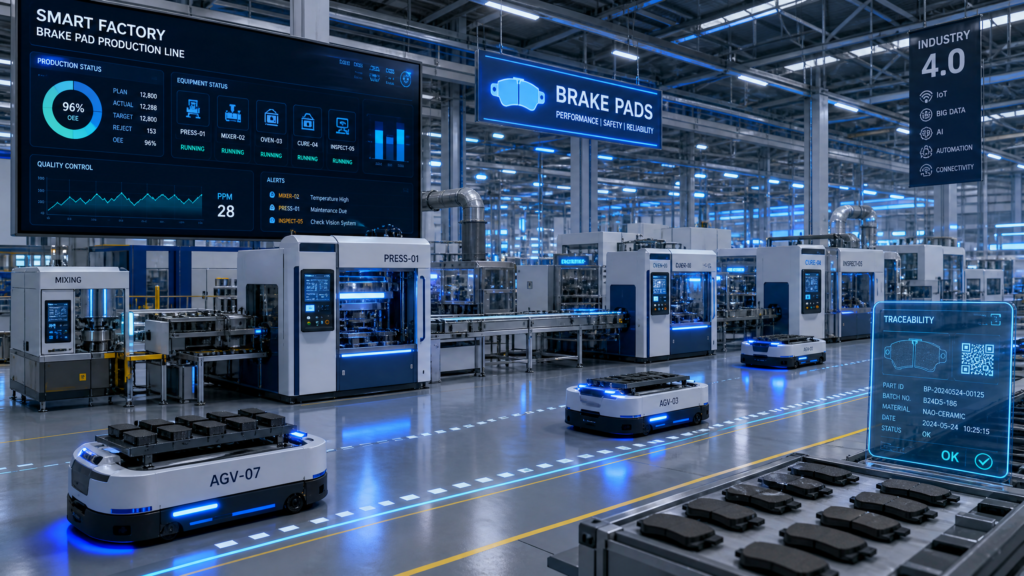
Driven by the wave of Industry 4.0 and smart manufacturing, the brake pad production industry is gradually moving towards full automation. The future brake pad factory will be a highly integrated, intelligently connected system, where every link, from raw material warehousing to finished product dispatch, will achieve automation and data-driven management.
The Science of Friction Formulations: Balancing Performance and Longevity
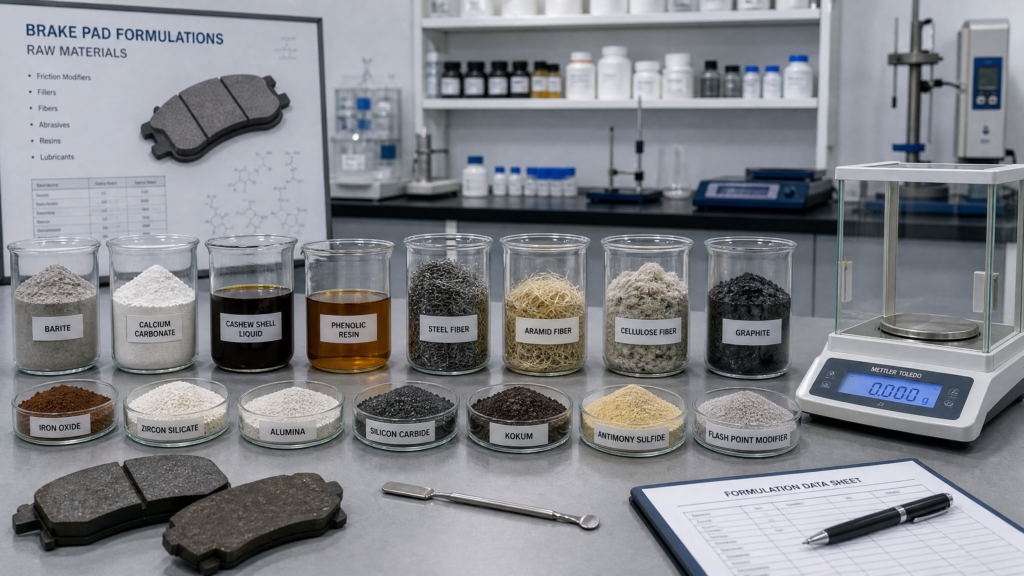
At the heart of a brake pad’s performance lies its friction material formulation. An excellent friction material formulation needs to find the optimal balance among multiple dimensions, including braking efficiency, wear resistance, noise control, thermal fade, and rotor wear. This science of formulation involves the precise proportioning of dozens or even hundreds of raw materials.
Brake Pad Hot Pressing: The Art of Pressure and Temperature
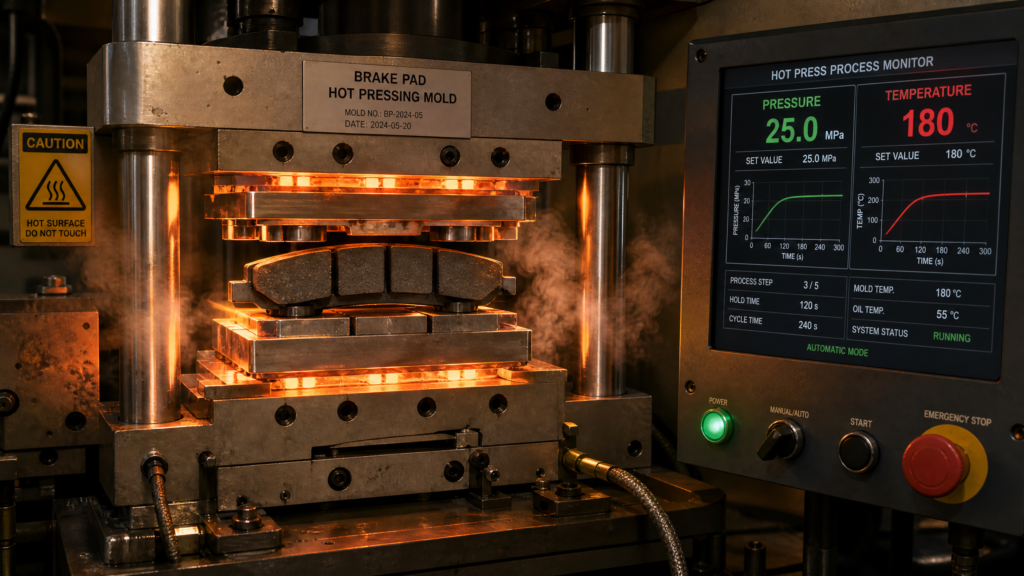
Hot pressing is one of the most critical stages in brake pad manufacturing, directly determining the product’s density, hardness, porosity, and ultimately, its friction performance. This process is not merely about applying pressure and heat but is an art of precisely controlling pressure, temperature, and time.
Mechanical Retention in Backing Plates: Why NRS Technology is Crucial?
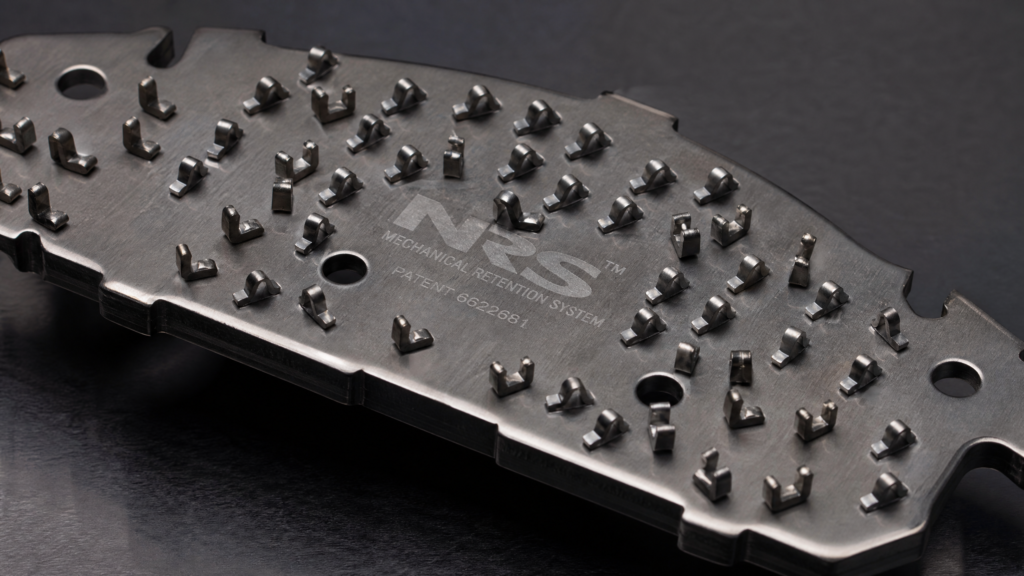
In the manufacturing process of brake pads, the backing plate plays a crucial role. It is not only the carrier of the friction material but also the core component that transmits braking force. Traditional brake pad manufacturing heavily relies on adhesives to secure the friction material to the backing plate. However, under extreme high temperatures and harsh braking environments, adhesives can degrade and fail, leading to the detachment of the friction material and causing severe safety hazards.
How to Choose Efficient Brake Pad Production Line Equipment?
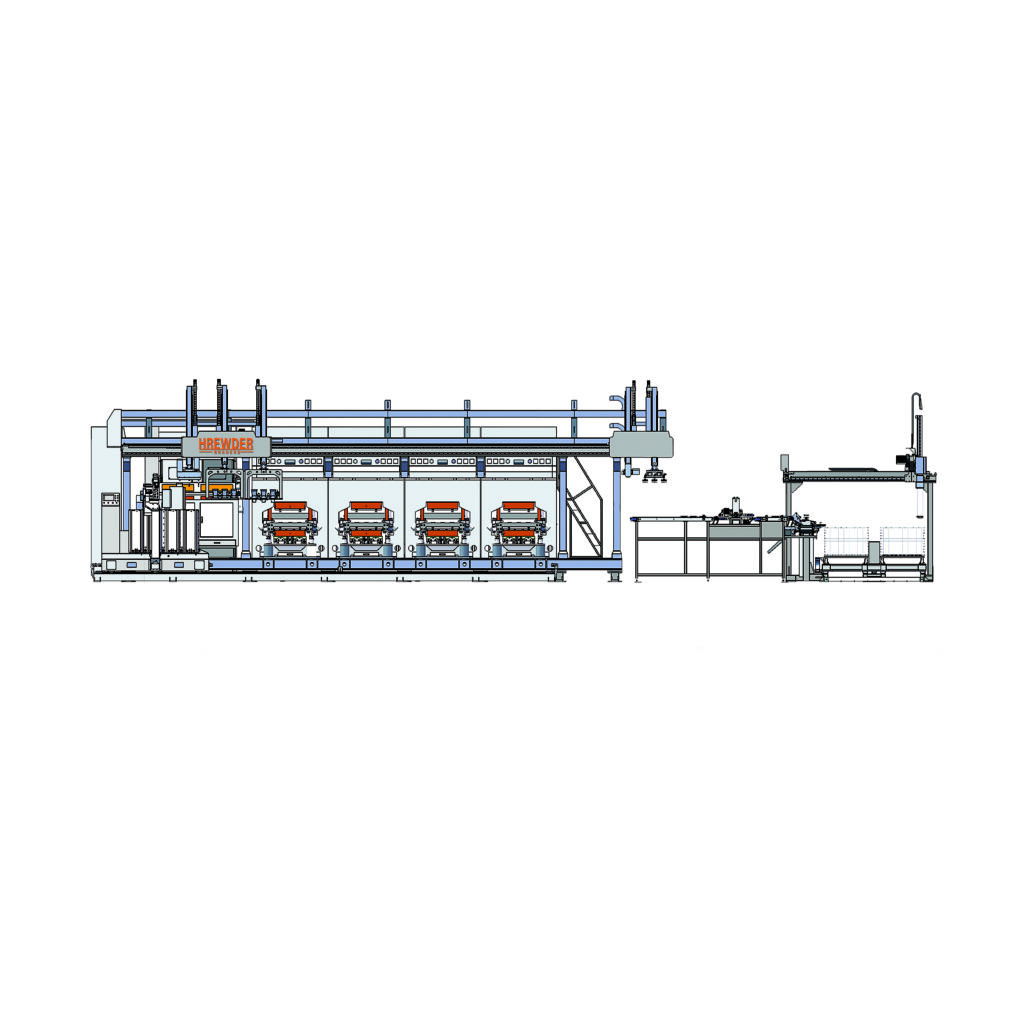
Establishing or upgrading a brake pad production line is a significant investment. Choosing the right production equipment not only affects product quality but also directly impacts production efficiency and manufacturing costs. A complete brake pad production line typically includes a mixing system, hot press machines, curing ovens, grinding machines, powder coating lines, and packaging equipment.
Development of Copper-Free Friction Materials under Environmental Trends
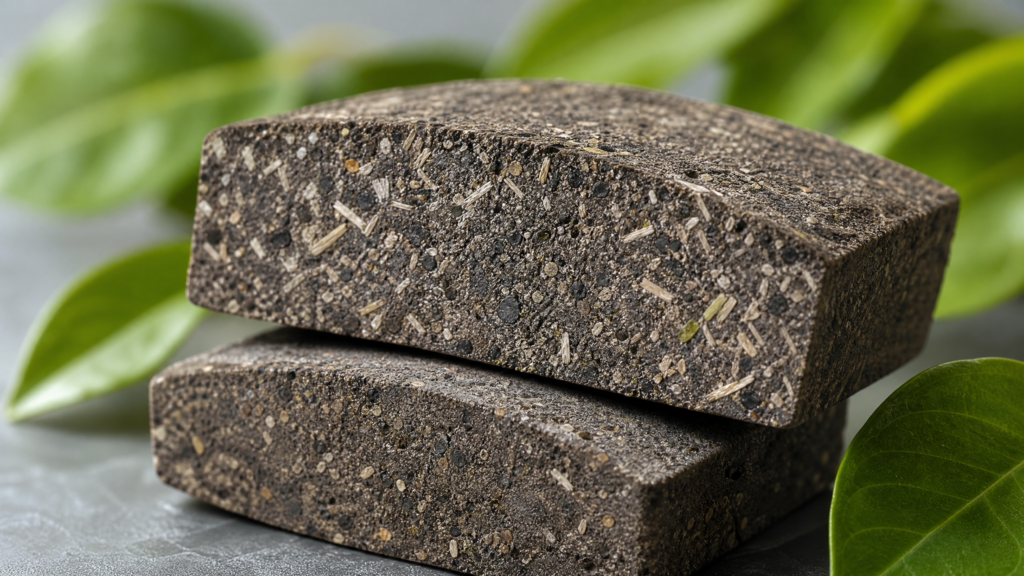
With the growing global awareness of environmental protection, dust pollution generated by automotive braking systems has attracted widespread attention. In particular, the copper element in friction materials can wash into rivers with rainwater after brake wear, causing severe damage to aquatic ecosystems. Consequently, states like California and Washington in the US have pioneered regulations limiting the copper content in brake pads, driving a global surge in the research and development of copper-free friction materials.
Precision Backing Plates: The Key to Quiet Braking
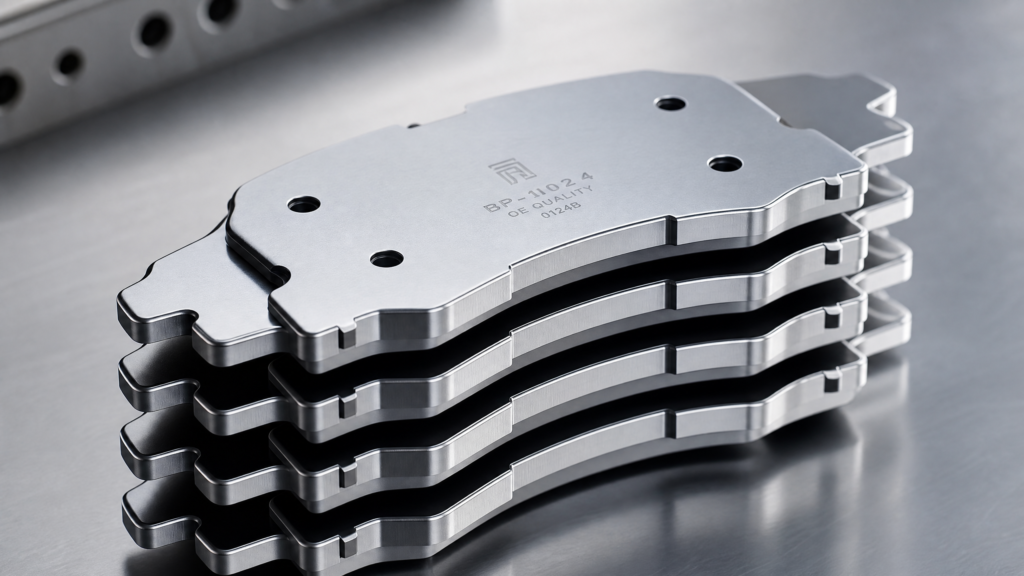
In automotive braking systems, Noise, Vibration, and Harshness (NVH) is one of the most direct experiential metrics for consumers. Many people blame brake squeal on the friction material, but in reality, the manufacturing precision of the backing plate is equally a critical factor in determining braking quietness.